


Just a few years ago, organizations were debating whether AI was real, whether it was overhyped, and whether it belonged in the enterprise at all. Today, that debate is likely over. Enterprises have invested heavily, pilots are running across the business, and boards are often asking a much harder question: Where is the measurable return?
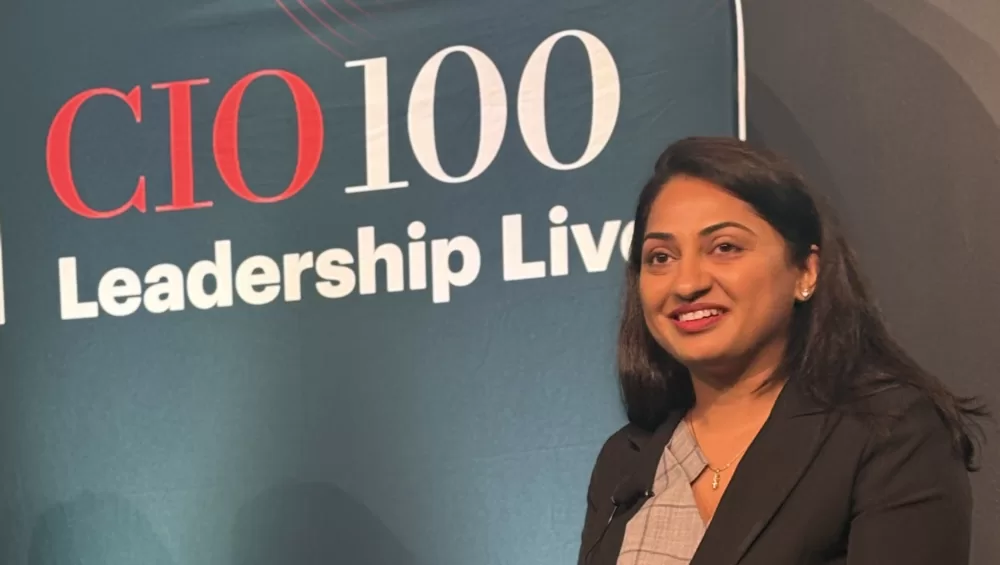
“The challenge is no longer whether AI works,” says Meghna Shah, Principal, Engineering and AI at PwC US, speaking at a recent CIO Leadership Live event in New York, NY. “It’s whether organizations can operationalize it responsibly, sustainably and at scale.”
The problem, she argues, isn’t a lack of innovation. It’s that too many organizations are stuck in what she calls “pilot theater.”
“Organizations are confusing the pilots as success in terms of the outcomes,” Shah says. “That’s what we call pilot theater. It’s just showing a bunch of pilots, but it’s not really moving the needle in terms of how the business is fundamentally changing.”
AI usage isn’t a metric
In many organizations, AI experimentation has become an end in itself. Business units launch disconnected initiatives, teams duplicate capabilities, and success is measured by usage rather than outcomes. AI may improve one step in a workflow while the broader process remains unchanged.
“Usage is not value,” Shah says. “Organizations say, ‘All our people are using AI.’ Then why isn’t it showing up in faster time to market? Why does it still cost the same? Why is there still rework? Why is the infrastructure still an issue? Why is the data still not connected?”
The underlying problem isn’t the technology itself. “When you look at initiatives that stall, it’s rarely because the models aren’t good enough,” Shah says. “It’s because the enterprise wasn’t engineered for intelligence.”
Shah’s point cuts to the heart of PwC’s Engineering approach: one built not advising clients on what to build, but on doing the building itself.
For the past several years, organizations have largely focused on how to add AI into existing processes. Shah believes they’re asking the wrong question. “We’ve been asking, ‘How do we add AI to the enterprise?'” she says. “The better question is, ‘How do we engineer an enterprise where AI becomes part of how we do business every day?'”
Answering that question requires much more than deploying new models. It often demands a modern engineering foundation capable of maintaining AI as a core business capability. At PwC’s Engineering, this translates into two distinct but complementary approaches: outcomes Engineering, focused on complex, high-value transformation, and Scaled Engineering, focused on volume, speed, and continuity. Taken together they ensure AI isn’t just deployed, but run, evolved, and improved at enterprise scale.
Shah says the organizations making significant progress share several common characteristics.
- First, they invest in engineering the foundation. While much of the market is focused on AI agents, foundational architecture often receives far less attention. “If your platforms aren’t modular, if your APIs aren’t connected, if your cloud is not engineered for scale, no amount of AI is going to fix it,” Shah says. “AI is going to amplify your architecture. It’s not going to fix it.”
- Second, successful organizations think beyond data collection to engineering intelligence. The challenge is not simply accumulating more information, but building systems capable of connecting, interpreting, adapting, and learning from that data in ways that help improve business decisions.
- Third, they shift from delivering AI projects to building AI products. “Projects finish,” Shah says. “Products, by definition, evolve. AI is never finished. “That distinction reflects one of the biggest mindset changes organizations should make. Traditional technology projects have defined endpoints. AI capabilities require continuous refinement as models improve, business priorities change, and new data becomes available.
- Finally, organizations that scale AI successfully engineer for continuous performance. Rather than treating deployment as the finish line, they establish the governance, monitoring, and operational processes required to enable AI systems to continue learning, improving, and delivering value over time.
Governance plays a critical role throughout this journey, but Shah rejects the idea that it slows innovation. Instead, she argues governance should become part of the engineering process itself. “The old philosophy was, ‘Let’s build it, then check it, then put it out in the world,'” she says. “The pace of change is so fast today that you don’t have the luxury to do that.”
Instead, governance should be embedded throughout development, helping organizations maintain appropriate oversight over data access, model behavior, security, and decision-making as AI systems evolve.
Ultimately, that’s why Shah believes scaling AI is an operating model transformation, not simply a technology initiative. “We know AI works,” she says. “The time for experimentation is over.”
PwC Engineering was built for exactly this moment: combining deep technical expertise, AI-native engineering, and a business-first mindset to help organizations stop piloting and start building the intelligent enterprise.
Where to get started
For CIOs wondering where to begin, her advice is straightforward: Stop experimenting with tools and start building governed pilots around real business capabilities. Demonstrations may prove technical feasibility, but they rarely create lasting enterprise value.
Also, rethink how success is measured. Instead of tracking AI adoption or token usage, organizations should focus on engineering and business performance metrics such as delivery velocity, quality, adaptability, cost to serve, incidents prevented, and decisions accelerated.
The organizations that ultimately lead in AI may not necessarily be those with more pilots or the latest models. They’ll likely be the ones that recognize AI isn’t simply another technology to deploy. It’s a capability that should be engineered into the fabric of the enterprise itself.
Ready to move beyond pilot theater? PwC engineers your cloud, AI, and data into one intelligent system — built for what you need next, not just what you need now.